
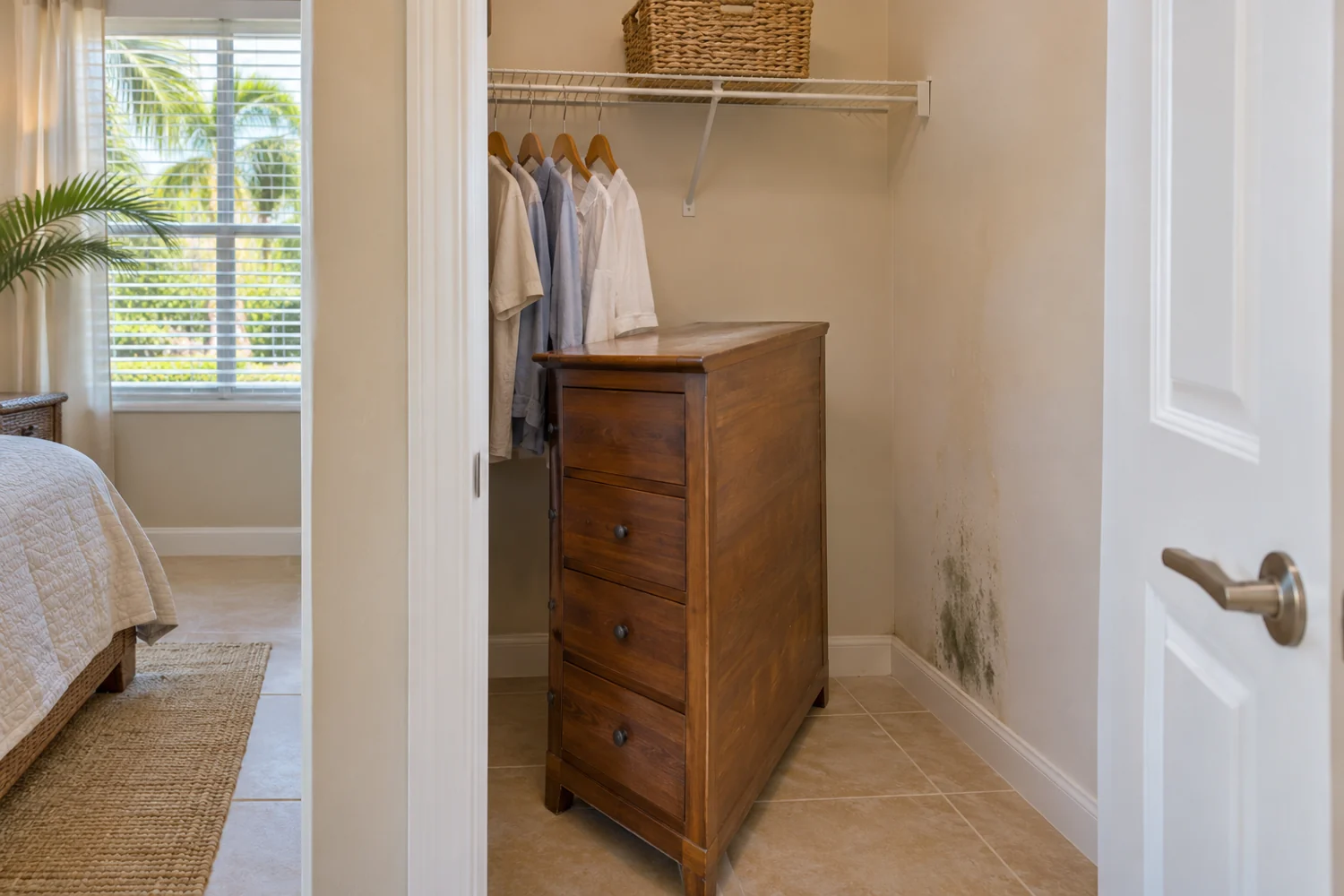
Keep affected items from spreading debris
Leave visibly affected belongings in the work area until a handling plan is discussed. Shaking fabrics or moving dusty boxes through clean rooms can spread debris. Photographs may help document condition before items are moved. Let the team know about valuable or sentimental belongings before cleanup starts.
Different materials need different decisions
A suitable hard item may be cleanable, while deeply affected porous items may not be practical to restore. Upholstery, paper, and composite furniture need careful consideration of their condition. Specialty items may require a separate restoration provider. Ask which contents are included in the cleanup scope so there is no assumption that every item is covered.
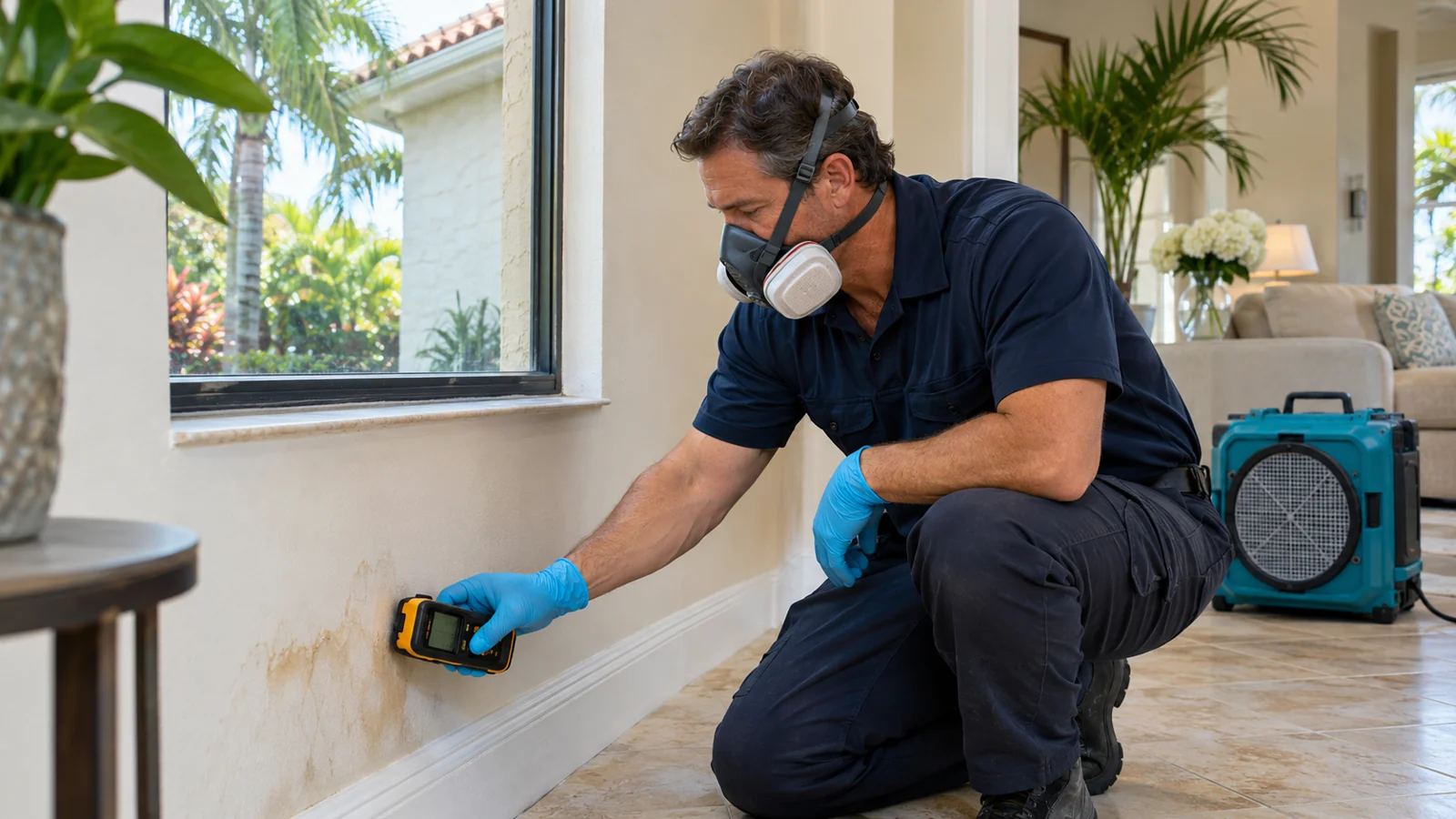
Store items only after the moisture issue is addressed
Returning belongings to a damp closet can recreate the conditions that damaged them. Check the storage area and allow repairs or drying to be completed first. Keep any claim-related photos and disposal decisions available for your insurer. Coverage and valuation questions should be directed to the insurer rather than assumed from a cleanup recommendation.
Discuss the cleanup at your property
Tell us where you found damage, when it appeared, and whether the source is still leaking. Let us know about a report or repair contractor already involved. We can discuss the remediation scope and the questions that need a separate professional. Call to confirm scheduling and the next step for your property.
Talk about your property