
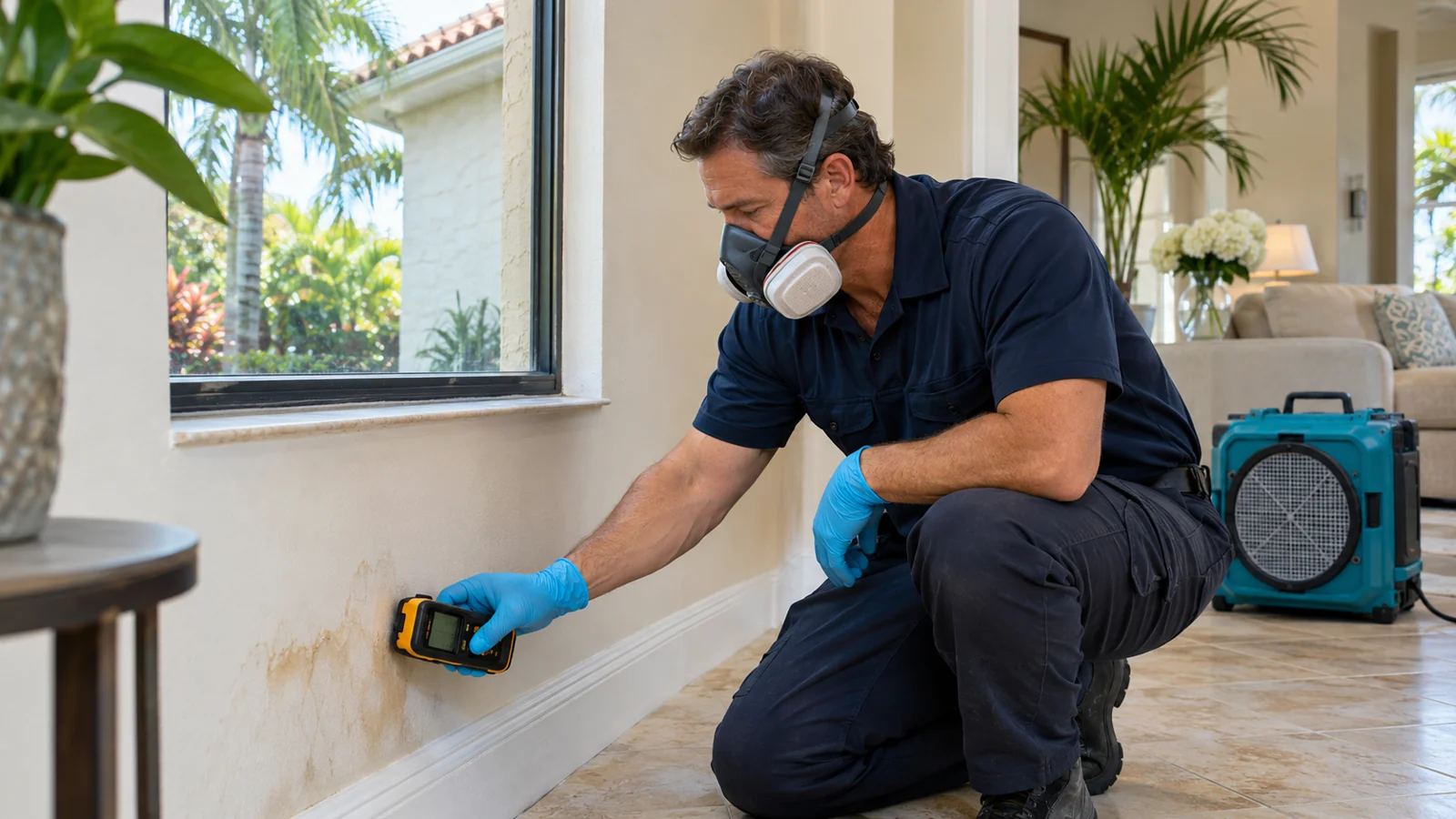
Start with the material and the cause
A cleaning product does not repair a leak or dry a wall cavity. Porous materials can remain affected even when their surface color changes. The appropriate approach depends on the material, the extent of damage, and the moisture history. Avoid treating a recurring patch as a product-selection problem without checking why it returns.
Avoid spreading debris or mixing chemicals
Do not dry-brush, sand, or blow air across visible growth as a quick cleanup attempt. Those actions can disturb debris and affect nearby areas. Never mix cleaning products, and follow the manufacturer’s directions for any product you use. If damage is extensive, recurring, concealed, or linked to contaminated water, discuss professional cleanup instead of experimenting.
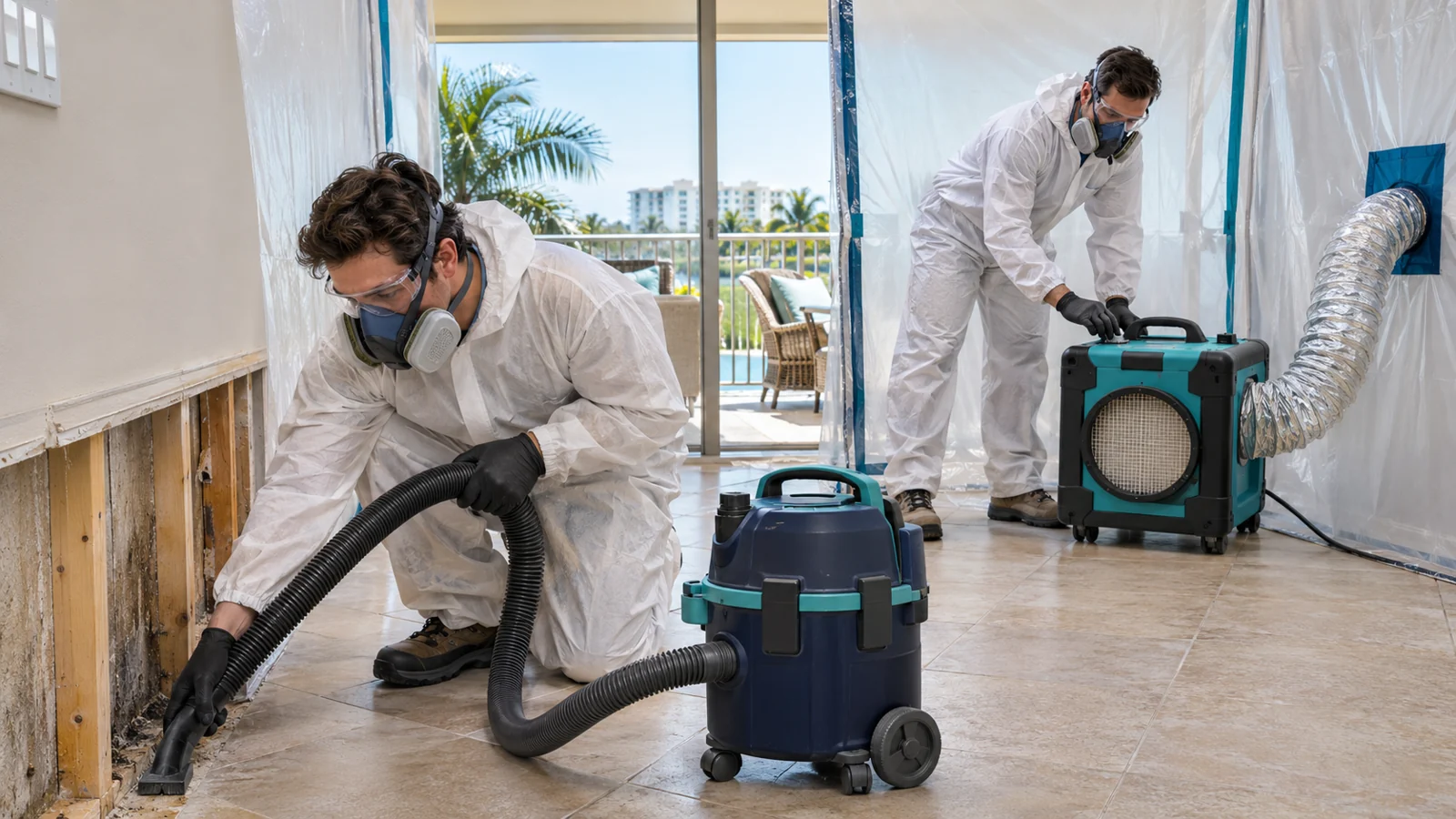
Ask what the proposed cleanup accomplishes
A professional scope should explain removal or cleaning of affected materials and protection of the work area. It should also address remaining moisture and separate source repairs. Ask whether testing or independent verification is relevant to the project rather than assuming a spray provides proof. The goal is a clear explanation of the work, not a promise based on the smell of a cleaner.
Discuss the cleanup at your property
Tell us where you found damage, when it appeared, and whether the source is still leaking. Let us know about a report or repair contractor already involved. We can discuss the remediation scope and the questions that need a separate professional. Call to confirm scheduling and the next step for your property.
Talk about your property