
Safety and the source come first
Do not enter standing water near electrical equipment or use a room with an obvious structural hazard. Storm water may carry contaminants, so its source affects the cleanup plan. Photograph accessible damage from a safe location and record when water entered. Contact the appropriate emergency service or qualified trade when a hazard or active intrusion needs immediate attention.
Drying needs extend beyond the visible water
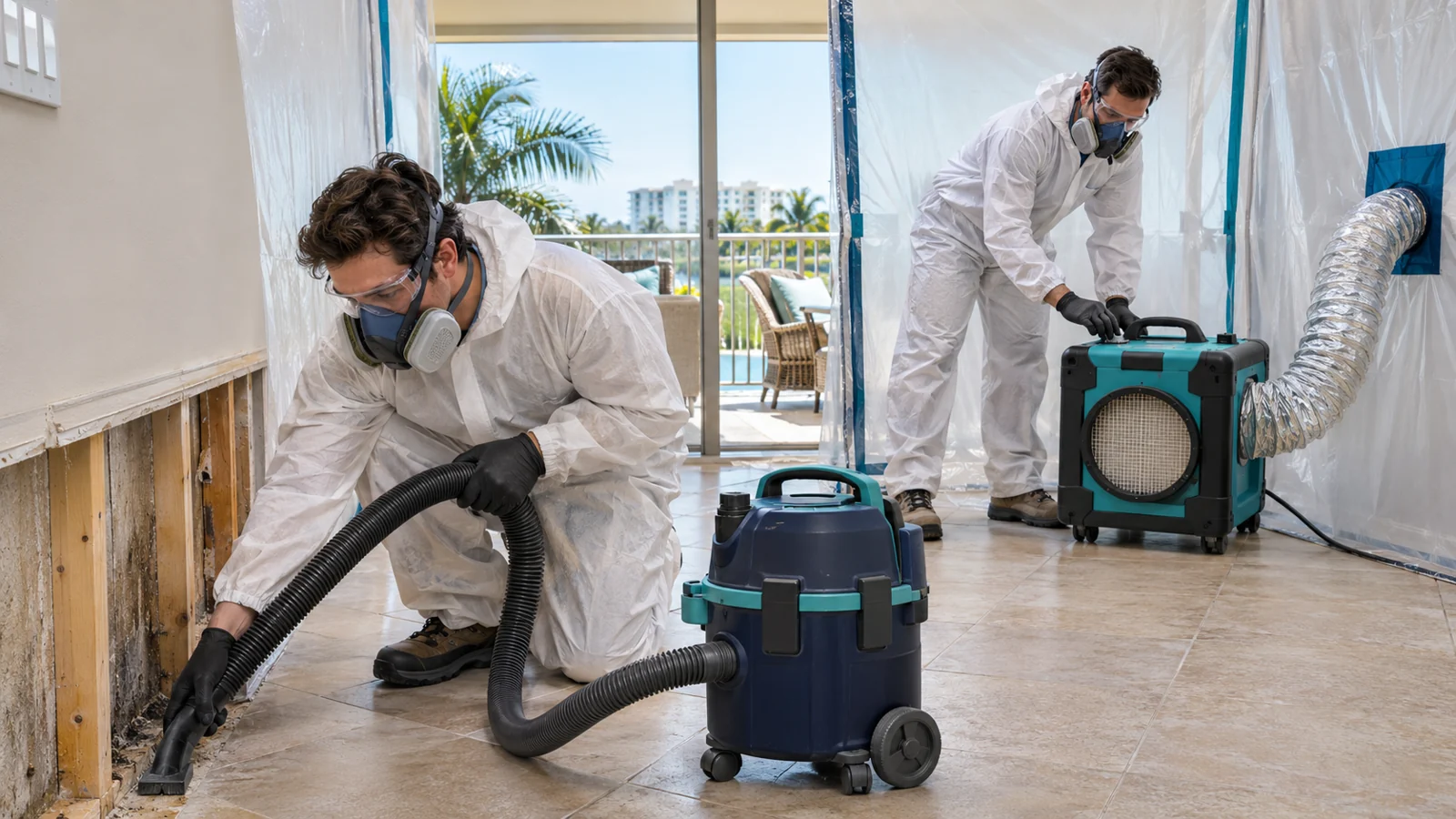
Rain can wet insulation, wall cavities, flooring, and cabinets. Surface drying does not show whether hidden materials remain damp. The assessment should consider where water traveled and which materials can be dried or need removal. Visible mold requires a cleanup plan in addition to correcting the water intrusion.

Coordinate records and repairs
A roofer or other building contractor may need to prevent additional water entry. Keep photos, repair records, and the cleanup scope for discussions with your insurer. Coverage depends on your policy and the event, so do not assume every storm-related mold loss is paid. Discuss remaining drying and any independent verification before new finishes are installed.
Discuss the cleanup at your property
Tell us where you found damage, when it appeared, and whether the source is still leaking. Let us know about a report or repair contractor already involved. We can discuss the remediation scope and the questions that need a separate professional. Call to confirm scheduling and the next step for your property.
Talk about your property